
Safe and Effective Exercise
Rowing involves almost all muscle groups
Rowing cannot (yet) be considered a mass recreational sport in our region. Unfortunately, Slovenia offers limited opportunities for rowing — aside from a few lakes and calm river sections that provide suitable conditions, there's hardly anywhere to use a rowing shell. An even greater challenge can be storing a boat that’s 7 meters or longer.
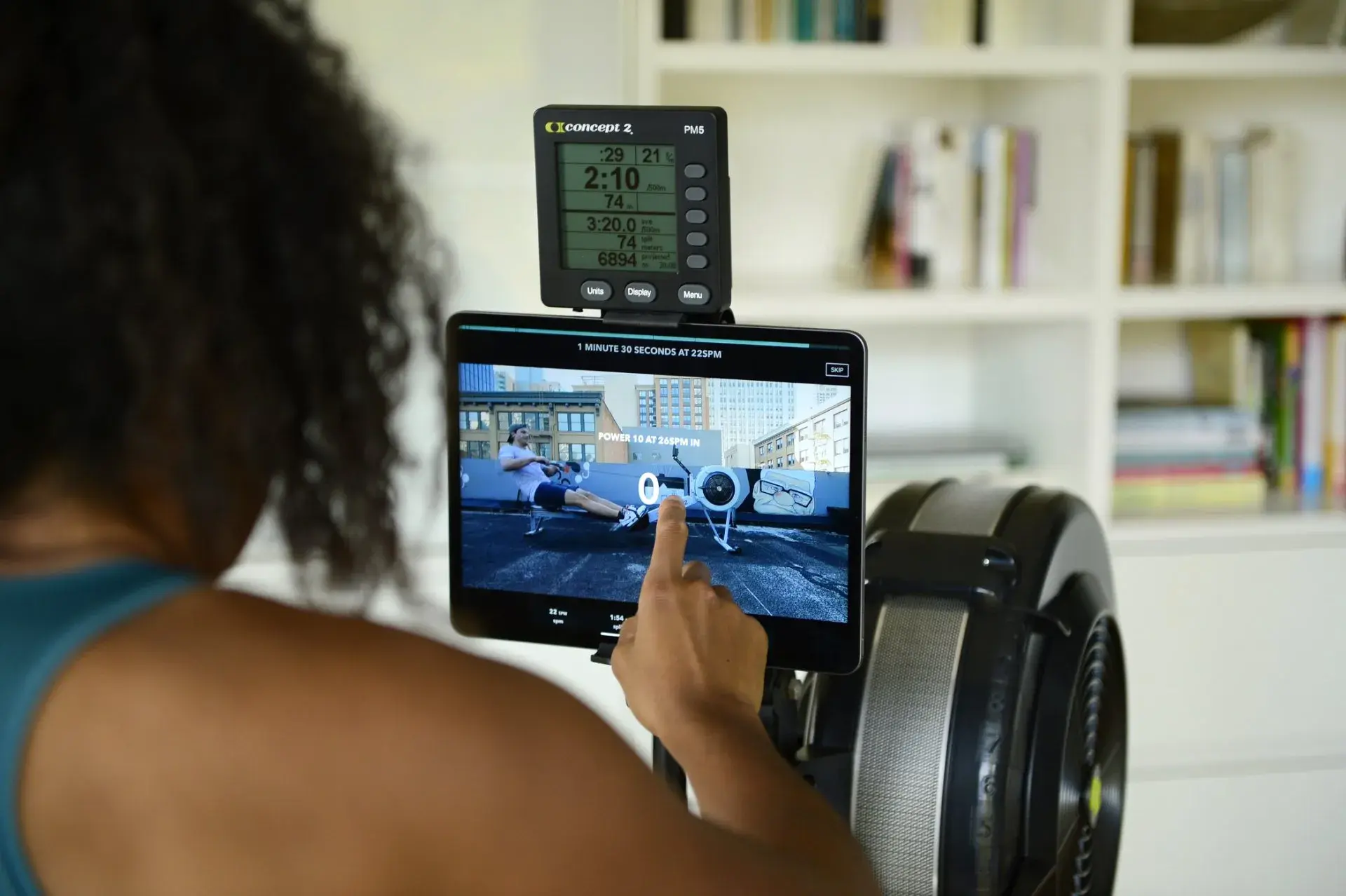
Fortunately, there is an alternative. In the search for the most suitable form of winter training for rowers, the rowing simulator was developed. Some of these machines offer a truly comparable workout — if you set aside the fact that you're not gliding on water.
It hardly needs to be said that rowing is one of the most effective, complete, and low-risk exercises when it comes to injury prevention.
During rowing, muscles and joints move through a significantly greater range of motion than in most other sports activities. As a result, training not only strengthens the muscles and joints, but also improves their flexibility and mobility. Because the movement is smooth and rhythmic, the risk of injury is minimal. Muscle load is symmetrical, as both sides of the body are equally and simultaneously engaged. This is why rowing is often included in rehabilitation programs — both for athletes and for people who are not typically active.
The rowing motion involves nearly all muscle groups. Different phases of the stroke engage the legs, arms, shoulders, as well as the abdominal and back muscles. Because so many muscles are involved, the body requires strong support from the cardiovascular and respiratory systems — which can be significantly improved with regular rowing workouts.