
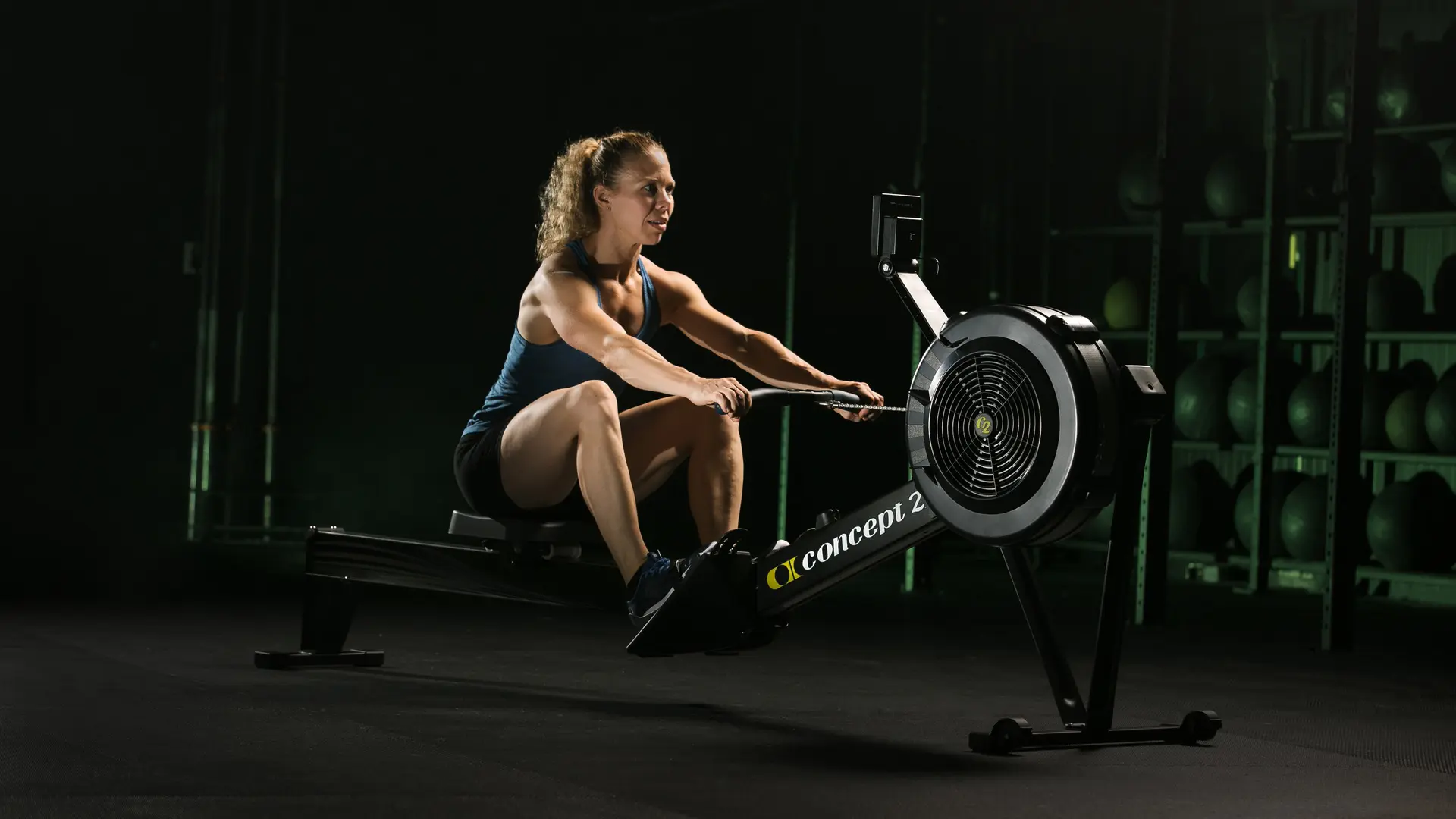
Proper Technique for Rowing
Rowing on the Simulator
With proper rowing technique, your workout becomes more enjoyable and effective, and completely safe from injuries.
The rowing stroke consists of four phases: catch, drive, finish, and recovery. Pay close attention to your body's position during each phase.
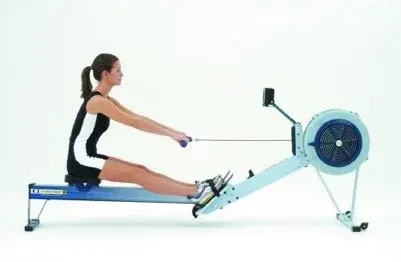
Landing preparation before starting
Legs are bent, arms are extended, back muscles are stretched out, torso slightly tilted forward
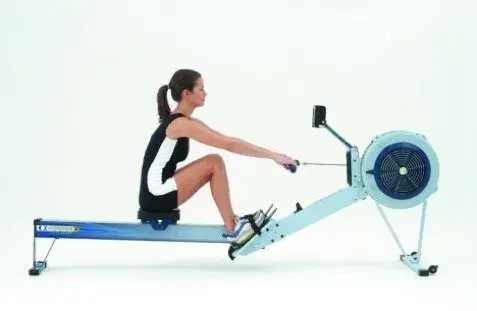
Start - Pull
Begin the pull by pushing off with your legs (torso and arms are straight, but remain in the starting position). When your legs are fully extended, pull your elbows back towards your body and slightly lean your torso backward at the same time.
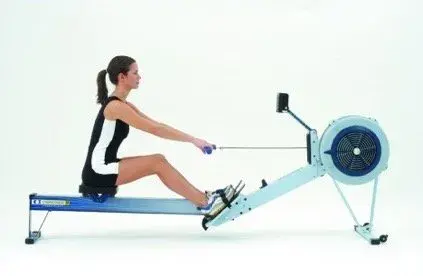
End of the stroke
Pull the elbows under the chest with the torso slightly tilted backward (spine relaxed and straight). Legs are fully extended.
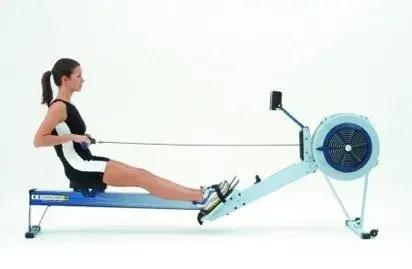
Returning to the start position of the stroke
Relax the shoulders and extend the arms. Slightly lean the torso forward (keeping the back relaxed and straight). When your elbows pass over your knees, bend your legs and hold the body position until contact.
Rowing on the simulator allows users to perform aerobic and anaerobic workouts, achieve and maintain their desired physical fitness and weight, as the full-body movement during exercise requires significant energy expenditure. With proper technique, we prevent excessive strain on the spine, individual limbs, and joints, enabling prolonged workouts.
Because it involves almost the entire muscular system and a wide range of motion in each stroke, the body needs good support from the cardiovascular and respiratory systems, whose capacities can be naturally improved with regular rowing.
During rowing, muscles and joints move through a much greater range of motion compared to many other activities. This means muscles stretch and joints move more extensively, ensuring greater flexibility of muscles and better joint mobility. Muscular loads are symmetrical, as we simultaneously and evenly load and strengthen both the left and right sides of the body, with movement being smooth and rhythmic, not jerky. Due to the seated position during exercise, increased body weight significantly does not impact joint load. This also reduces the risk of injury during workouts.
Specific equipment and movement patterns facilitate effective muscle mass recovery and can improve joint mobility (damaged joints), which is why this type of workout is often included in rehabilitation programs for top athletes, recreational enthusiasts, as well as individuals who do not engage in sports professionally.