
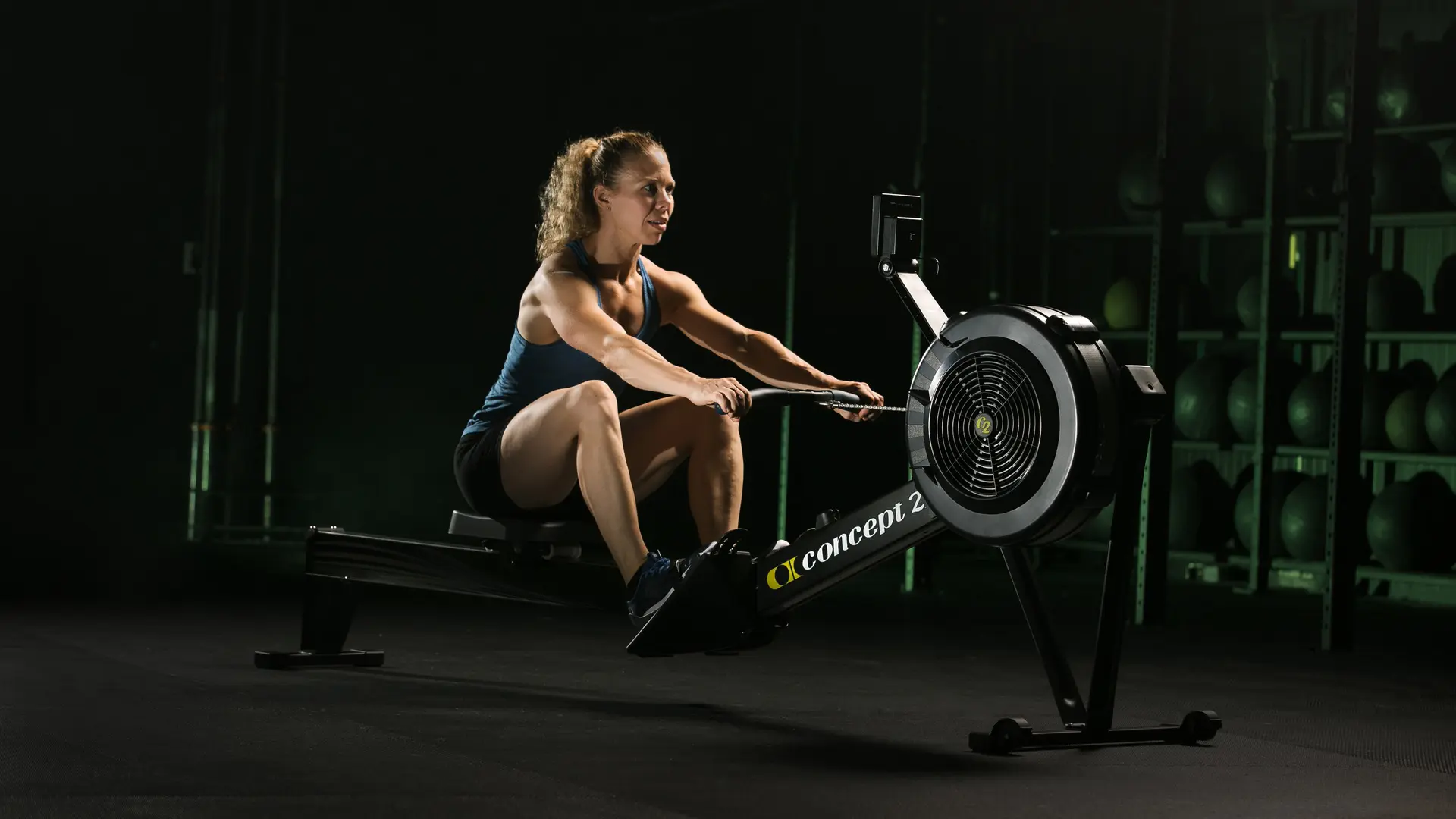
4 BENEFITS OF TRAINING ON A ROWING SIMULATOR
If you are forced to work out indoors and are looking for an exercise that will boost your heart rate, involve even more muscle groups...
When you're confined to indoor space and seeking a workout machine that elevates your heart rate, engages multiple muscle groups, and delivers results, a rowing simulator is the perfect solution.
It transfers an ancient movement pattern (humans have rowed on boats since the dawn of time) into your home or gym when water isn’t available. Yes, it's still a simulator in an indoor environment—but if you manage intensity wisely, it can be more engaging than other machines. Rowing activates the major muscles in your back, glutes, legs, and arms, giving you cardio and strength training in one session.
That's why rowing simulators are frequently integrated into a wide variety of fitness protocols—from basic warm-ups to headline workouts in high-intensity CrossFit programming.
"Rowing on a simulator is an excellent way to improve cardiovascular capacity and muscular endurance with minimal joint stress," says Hollis Tuttle, lead instructor at CITYROW Go in New York. "As a low-impact sport, rowing reduces the risk of joint injury (hips, ankles, knees), which are prone to strain in high-impact activities." She adds that rowing is suitable for individuals of all body types, ages, sizes, and fitness levels. "You get both strength and cardio training in a single session," Tuttle concludes.
Four Major Benefits of Rowing on a Simulator
1 – Ideal Warm-Up
"Proper warm-up is essential for a successful workout; your heart, muscles, joints, and mind need preparation," says Tuttle. Rowing warms up the entire body, making it a safe and effective pre-workout activity—even if rowing isn’t part of your main program.
2 – Workout Variety
You can train at high intensity with less joint strain via rowing.
"Your joints won’t experience the same stress from ten 400 m 85% intensity sprints on a rower as from running sprints," explains Tuttle. Rowing incurs fewer injuries and demands shorter recovery compared to high-intensity running.
"Following a tibia fracture, rowing helped me maintain cardiovascular fitness and muscle mass," she notes.
Reminder: always consult a professional before returning to rowing post-injury.
3 – Meditative Effect
Rowing can be mentally calming with fewer distractions compared to outdoor running.
"It can be deeply meditative," says Tuttle. "Once you find your rhythm, you can close your eyes, sync your breath, and enjoy the movement."
If time is tight, rowing burns more calories than indoor cycling at equivalent intensity—making it a smart choice when you're short on time.
4 – Perfect Finisher
"There’s no better finisher than a 5–10 minute EMOM session: row 100–200 m each minute depending on fitness, then rest for the remainder," says Tuttle.
Aim for around 90% effort, with at least 20 seconds rest.
As your fitness and technique improve, increase the distance or number of sets—and track your progress and reward yourself!